Prepare the Next Build Tell it the job. The kit is on the rack.
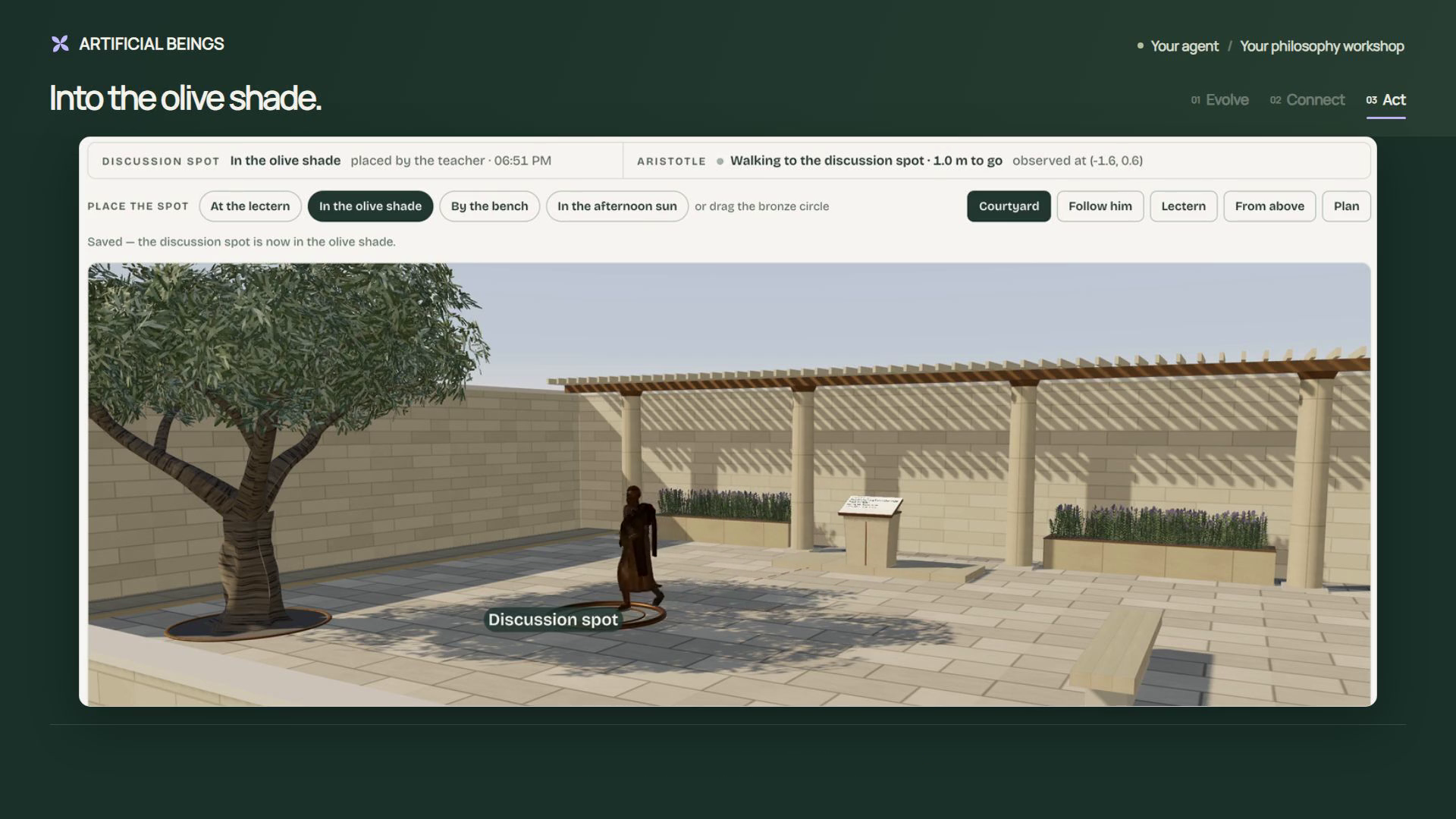
Kits the parts for the next build: a robot arm picks each one from stock into the assembly tray, and every move goes on the record.

Kits the parts for the next build: a robot arm picks each one from stock into the assembly tray, and every move goes on the record.
Finds the companies you want to reach, then their executives’ work emails and LinkedIn profiles, each with the page it came from.
A doctor sends a patient’s chart and asks a question aloud; the atlas answers from its research reports, with citations.
 Brain
 Body
 Memory
 Other Agents
 Cursor
 ChatGPT & Codex
 Claude Code
 Gemini
 Models & harnesses
 OpenRouter
 World models
 Web
 Mobile
 VR
 Gmail
 Robotics
 Windows
 Meta Quest
 macOS
 Raspberry Pi
 Local
 Azure
 Cloud
 0G
 Decentralized
 AWS S3
 Google Cloud
 Creators
 Signal
 LangGraph
 Letta
 CrewAI
 Open Claw
 Telegram
 WhatsApp
Maker builds agents from your words. As AI improves, they evolve, keep their memory and work, and can earn for you.
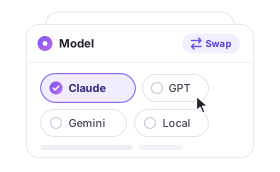
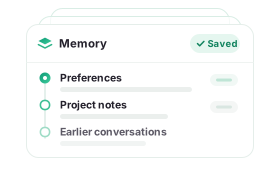
Each agent’s memory, tools and identity live apart from the AI model underneath. Switch to a better model when it arrives, and your agent keeps everything it has saved.
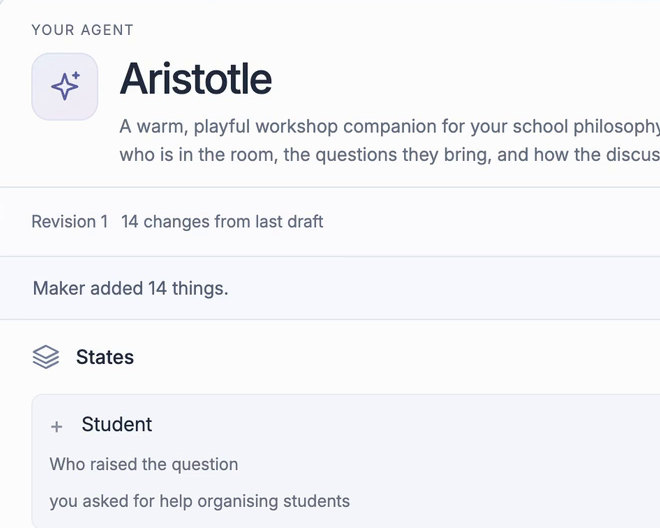
Tell Maker what you need in your own words. It turns your request into a design you can check, then builds the agent, tests it and keeps it running.
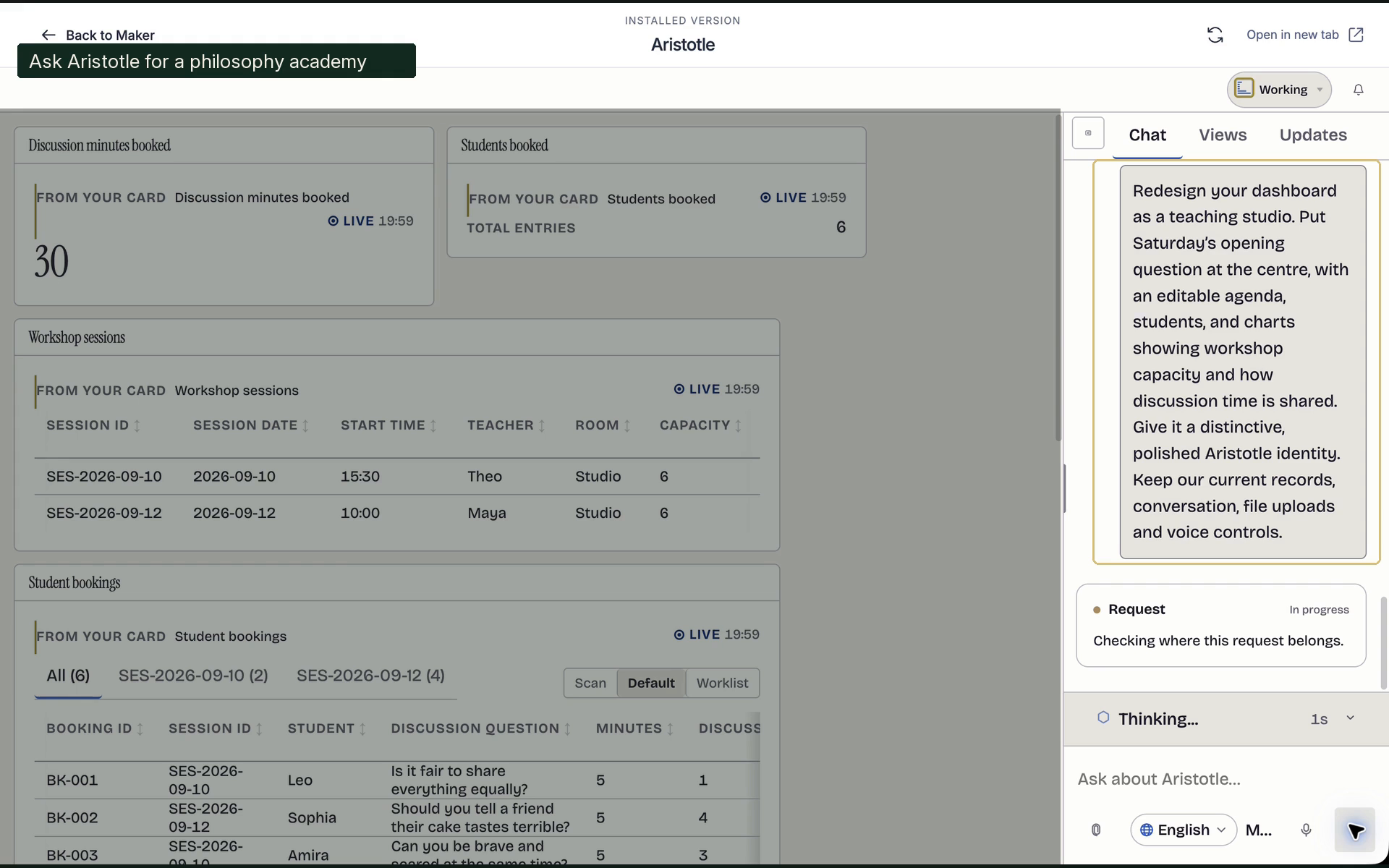
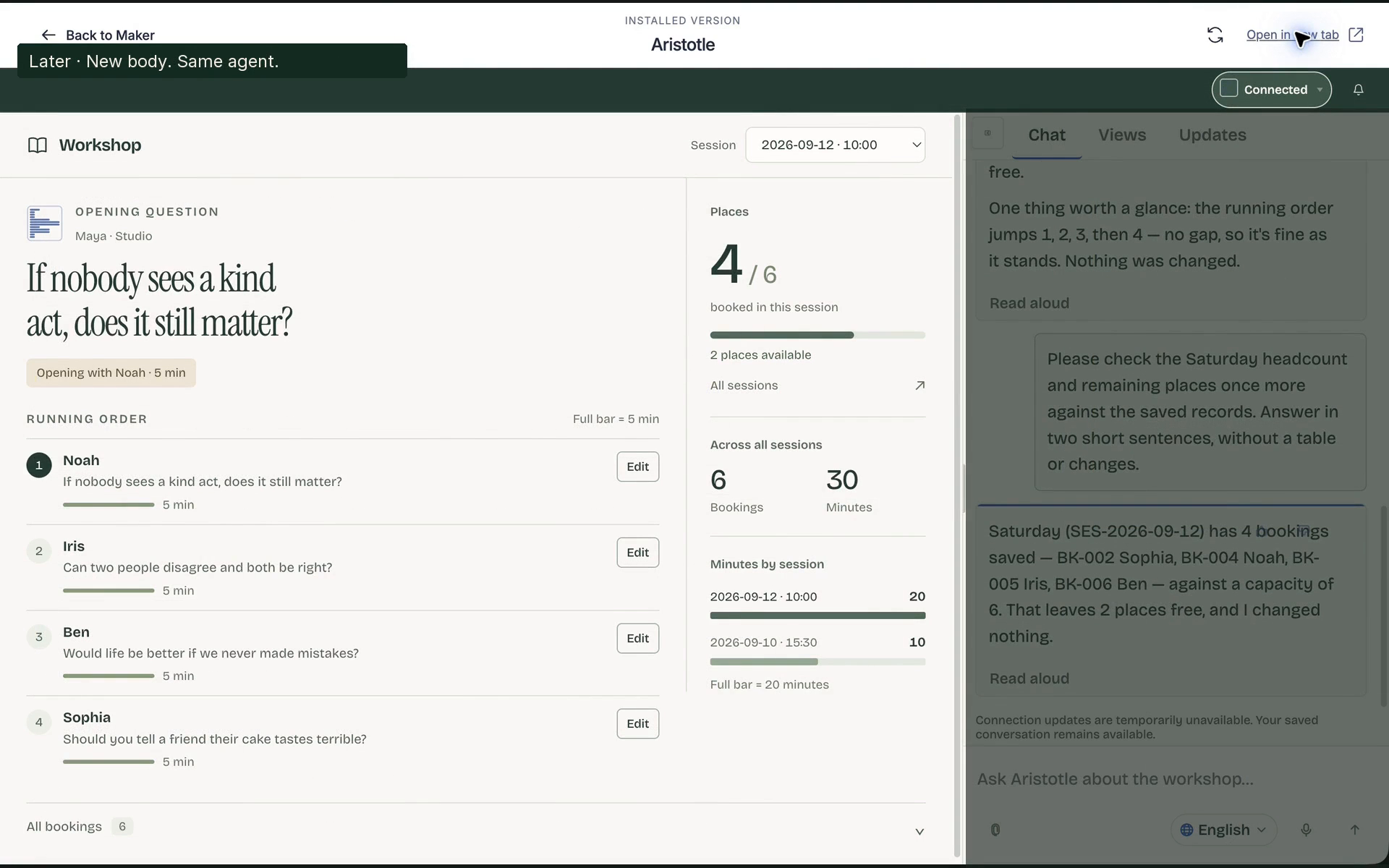
Keep evolving your agent. Its memory and work carry forward.
Your own address that your customers and staff sign in to, with team workspaces, approvals and the full history.
Switch between models and storage with one-line. The agent's work stays.
Recorded Agents play Minecraft together in a shared world.
Try this agentArtificial Beings (AB) turns your descriptions into AI agent applications with their own memory, tools, interfaces and identity. Create a research assistant, a specialist workflow, an imaginative character or a team of agents working together. Start with what you want to make. AB turns it into a design you can shape, then builds, tests and hosts it.
When analyzing AB, one should first envision a future where intelligence grows exponentially, then its true merits will reveal itself.
The model is a component. Your creation is the enduring asset. Keep its knowledge, identity and saved work as the intelligence behind it advances.
A research agent, for example, can keep its companies, sources and corrections as its underlying model changes. Explore Company Research to see what that work looks like.

 Artificial Beings